Selecting the right mammography machine is a major decision for hospitals, diagnostic centers, and breast imaging departments across Africa. The choice between conventional 2D digital mammography and 3D digital breast tomosynthesis (DBT) affects image quality, workflow, patient dose considerations, and long-term operational costs. Procurement teams, radiologists, distributors, and government healthcare project officers need clear information to match system capability with local infrastructure, patient volume, and available support.
This guide explains what a mammography machine is, how 2D and 3D systems differ, key selection criteria, cost factors, and how to evaluate suppliers. It is written to help African hospital buyers and medical equipment distributors make informed decisions before requesting quotations.
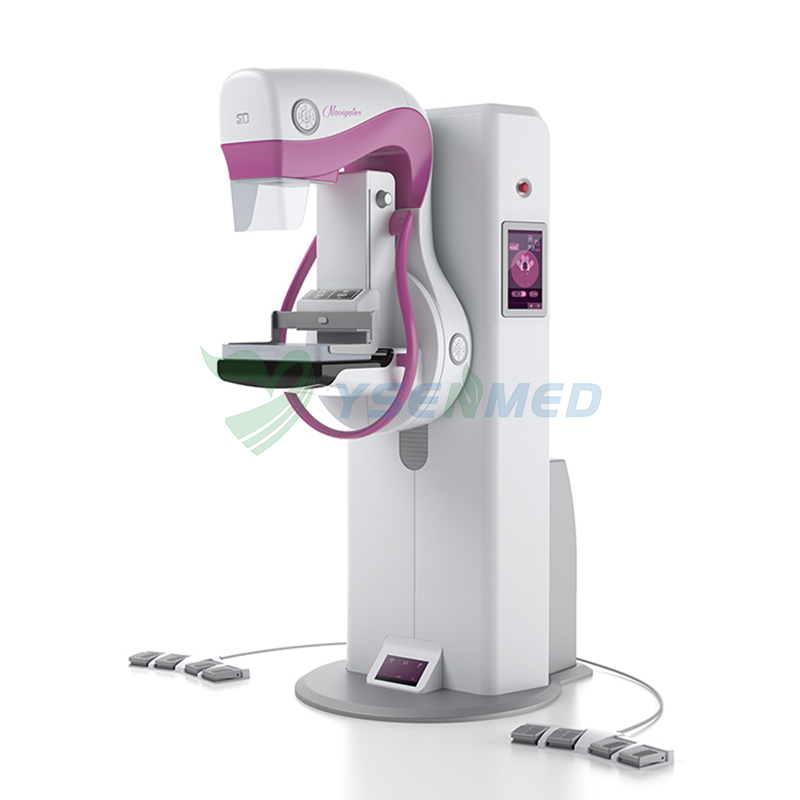
A mammography machine is a specialized X-ray system designed to produce detailed images of breast tissue. It is used for screening and diagnostic evaluation of breast abnormalities. Modern systems are digital and use flat-panel detectors to convert X-rays into electronic images that can be viewed, stored, and shared immediately.
Two main digital approaches are widely considered today: standard 2D full-field digital mammography and 3D digital breast tomosynthesis (DBT). Both support early detection efforts, but they differ in image acquisition and clinical information provided.
For many African hospitals expanding women’s health services, a well-chosen mammography machine becomes a core part of the radiology department’s diagnostic capacity.
How Does a Mammography Machine Work?
The system compresses the breast between a paddle and the detector to spread tissue and reduce overlap. An X-ray tube generates a low-energy beam that passes through the breast. The detector records the transmitted radiation and creates a digital image.
In 2D mammography a single projection image is acquired for each view (typically craniocaudal and mediolateral oblique). In 3D DBT the X-ray tube moves in an arc and acquires multiple low-dose projections. These projections are reconstructed into a series of thin slices that reduce tissue overlap and can improve lesion visibility.
Both approaches require careful positioning, appropriate compression, and consistent technique. Image processing software and workstations support review and reporting.
Main Applications of Mammography Machines
Mammography systems are used in:
- Hospital radiology and women’s imaging departments
- Dedicated breast screening centers
- Diagnostic clinics evaluating symptomatic patients
- Teaching hospitals training radiologists and technologists
- Public health screening programs
- Facilities offering both screening and diagnostic services
In many African hospitals a single digital system often serves both screening and diagnostic needs, depending on patient volume and available staff.
Key Features to Consider
When evaluating a mammography machine, procurement teams should focus on factors that affect clinical performance and daily operation:
- Image quality and detector technology
- Availability of 2D only or combined 2D/3D DBT capability
- Dose management features
- Ergonomics for patient positioning and technologist workflow
- Workstation and reporting software
- Power requirements and tolerance for local electrical conditions
- Mechanical reliability and ease of maintenance
- Availability of training for technologists and radiologists
- Spare-parts supply and service response
- Installation space and room shielding requirements
- Compatibility with PACS and hospital IT systems
Buyers should request current technical documentation and confirm that the system meets local regulatory expectations. Requirements may differ by country and should be verified with the supplier and competent authorities.
Types of Mammography Machines: 2D vs 3D DBT
| Type |
Main Characteristics |
Key Advantages |
Suitable Buyers |
| 2D Digital Mammography |
Single projection images per view |
Lower cost, simpler workflow, proven screening tool |
Hospitals starting breast imaging or with limited budgets |
| 3D Digital Breast Tomosynthesis (DBT) |
Multiple projections reconstructed into slices |
Reduced tissue overlap, improved lesion characterization |
Higher-volume centers seeking advanced diagnostic capability |
| Combined 2D + 3D systems |
Both modes available on one platform |
Flexibility for screening and diagnostic use |
Facilities planning long-term growth |
3D DBT typically involves higher equipment cost and slightly longer acquisition time, but many centers value the additional diagnostic information. The decision depends on clinical priorities, expected patient volume, and available budget.
How to Choose the Right Mammography Machine
Practical steps for African hospital buyers and distributors:
- Define the primary clinical need (screening, diagnostic work-up, or both).
- Estimate expected daily or weekly examination volume.
- Assess available room space, power supply stability, and radiation shielding.
- Compare 2D-only versus 2D/3D configurations against budget and clinical goals.
- Calculate total cost of ownership, including installation, training, service, and potential upgrades.
- Confirm the supplier’s experience exporting to African markets and providing documentation.
- Request detailed specifications, sample images, and configuration options.
- Clarify warranty coverage, service response expectations, and spare-parts availability.
- Evaluate training programs for technologists and interpreting radiologists.
- For government tenders or multi-site projects, prefer suppliers able to coordinate complete documentation and installation support.
Distributors should also review long-term service network reliability.
Mammography Machine Price and Cost Factors
Exact prices vary according to technology level (2D vs 3D), detector specifications, software packages, and destination country. There is no single standard figure. Major cost drivers include:
- 2D versus 3D DBT capability
- Detector technology and image processing features
- Workstation and reporting software
- Installation, room preparation, and shielding
- Training programs for staff
- Warranty length and service contracts
- Shipping, insurance, import duties, and local taxes
When requesting quotations, provide information on intended clinical use, expected examination volume, available power and space, preference for 2D or 3D, and delivery timeline. Clear details help suppliers recommend appropriate configurations and avoid mismatched proposals.
Why Consider Medical Equipment from China?
China supplies a range of digital mammography systems to international markets. Practical advantages frequently noted by buyers include:
- Availability of both 2D and 3D configurations
- Competitive pricing that helps hospitals manage limited capital budgets
- Manufacturing capacity for individual units and project orders
- Flexibility for configuration adjustments
- Experience with export packaging, documentation, and international logistics
These advantages are valuable only when the individual supplier maintains consistent quality systems and reliable after-sales support. Each supplier should be evaluated independently.
Choosing a Reliable Manufacturer or Supplier
A reliable supplier typically demonstrates:
- Documented quality management processes
- Clear product documentation and performance information
- Experience exporting medical imaging equipment to African markets
- Ability to support installation guidance or commissioning
- Structured training resources for clinical staff
- Transparent communication on lead times and spare parts
- Willingness to recommend systems matched to actual clinical needs and infrastructure
YSENMED operates as a professional medical equipment supplier from China, providing mammography machines and related radiology equipment to international distributors, hospitals, clinics, and healthcare projects. The focus is on matching configurations to buyer requirements and supporting export logistics, training coordination, and after-sales communication. Buyers should request current specifications and support details directly.
YSENMED Mammography Solutions
As a medical equipment supplier serving overseas markets, YSENMED offers mammography systems suitable for hospitals and diagnostic centers across Africa. Configurations are selected to address practical requirements such as clinical imaging needs, straightforward operation, and coordinated installation and training support.
Distributors and hospital radiology teams can discuss expected patient volume, preference for 2D or 3D capability, available space and power conditions, and budget parameters so that appropriate systems are recommended. YSENMED supports international shipping arrangements and works with partners on local training and spare-parts coordination where feasible.
Conclusion
Selecting a mammography machine requires careful comparison of 2D and 3D DBT options against clinical goals, patient volume, infrastructure realities, and total cost of ownership. Both technologies support breast imaging, yet the right choice depends on matching capability to local resources, staff expertise, and long-term service capacity.
Hospital buyers, diagnostic centers, and medical equipment distributors across Africa benefit from clear specifications, realistic configuration advice, and suppliers prepared to handle export, installation, and training. Image quality, dose considerations, workflow practicality, and after-sales arrangements should guide the final decision.
If you are planning a hospital project or looking for a reliable medical equipment supplier, you can contact YSENMED for product specifications, configuration recommendations, and quotation information.